
Project Manager’s Quickstarter

A fast, no‑fluff guide. Read top‑to‑bottom like a story, or jump right to the hacks.
Part I — Foundations
1) Is this actually a project or just a process?
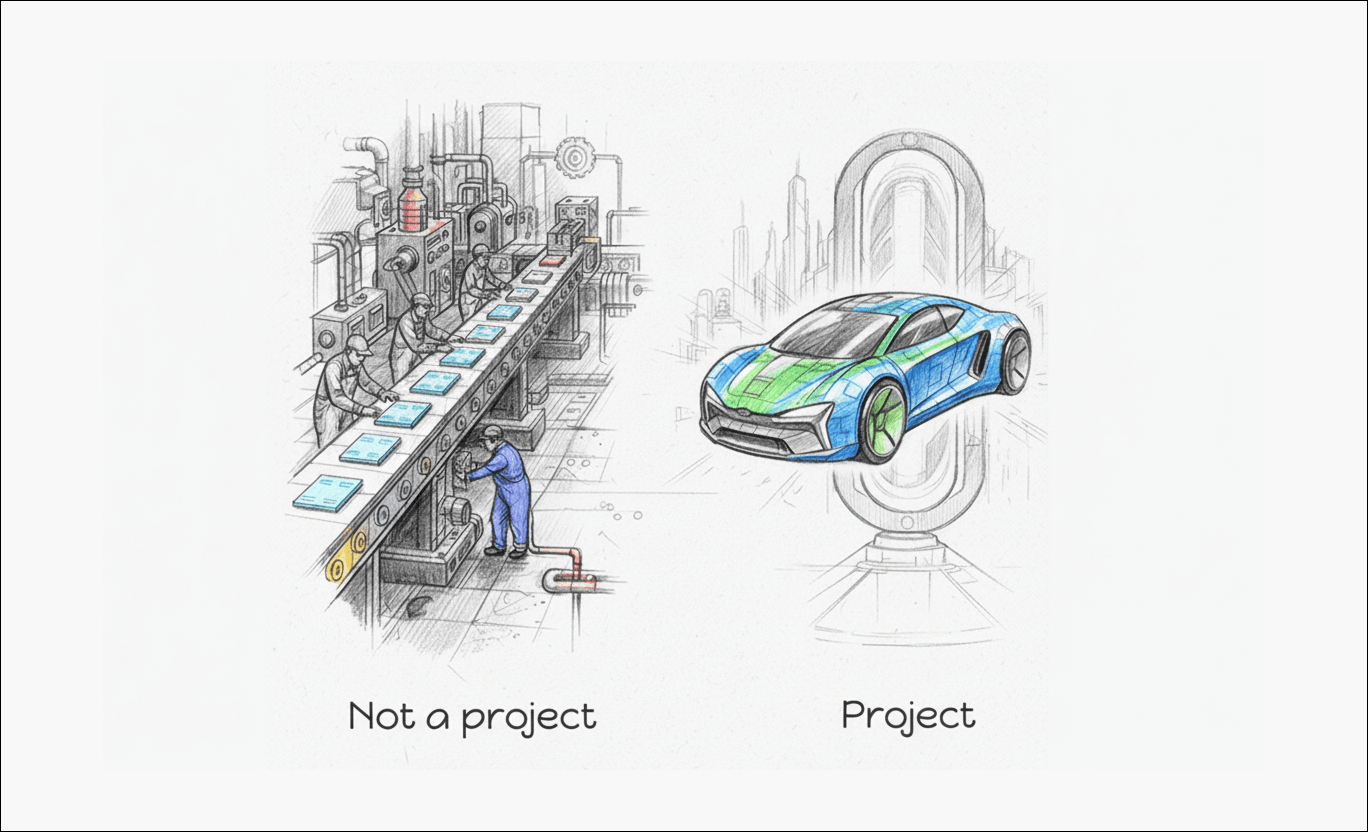
A project is a chunk of work that starts and ends, has a specific goal, runs under constraints (time, budget, people), and comes with uncertainty (you don’t fully know how you’ll get to the result when you start).
If the work has a lot of uncertainty but never really ends (like improving Google Maps for years), that’s product work, not a project. And if the work is repetitive and predictable, done the same way every day (like an assembly line in a factory), that’s operations, not a project.
2) The triangle you can’t break
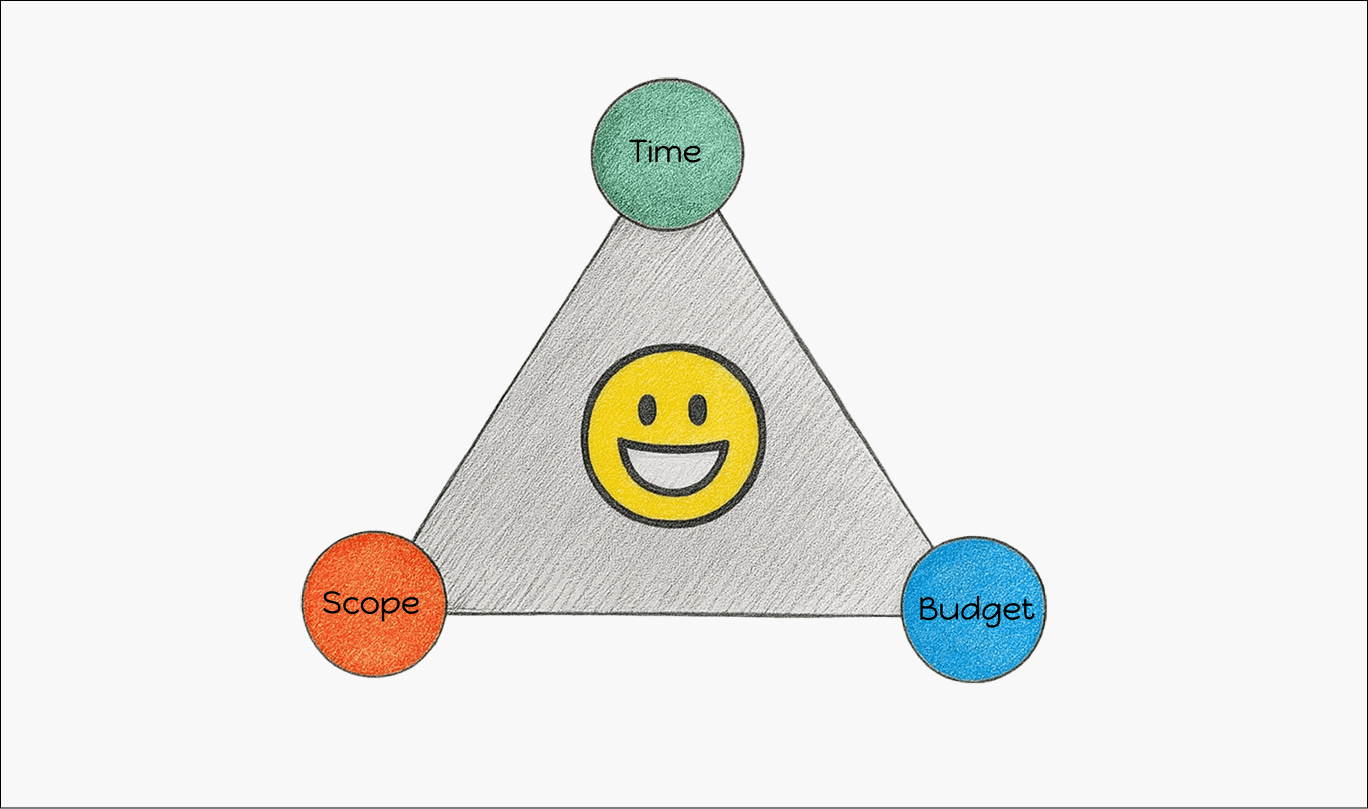
The project management triangle is your reality check, and it’s simple: every project is limited by three factors at the same time — time (deadline), cost (budget), and scope (how much work and what exactly you're delivering).
Change one side of the triangle, and at least one of the others has to shift too. Want to speed things up? You’ll need more money, or you'll have to cut scope. Got a bigger budget? You might end up adding more work or stretching out the deadline. This is an almost accurate definition, but not 100%. An important element is missing: the satisfaction of key stakeholders. Without it, even if you hit time, cost, and scope, the project may still be considered a failure.
The deal is you can’t ignore this triangle. If you think you can mess with time, cost, or scope without the others getting messed up too, you’re setting yourself up for failure. The result? The project’s either going to be late, over budget, or not live up to expectations — whether for the client or the team.
3) Where PM methods came from
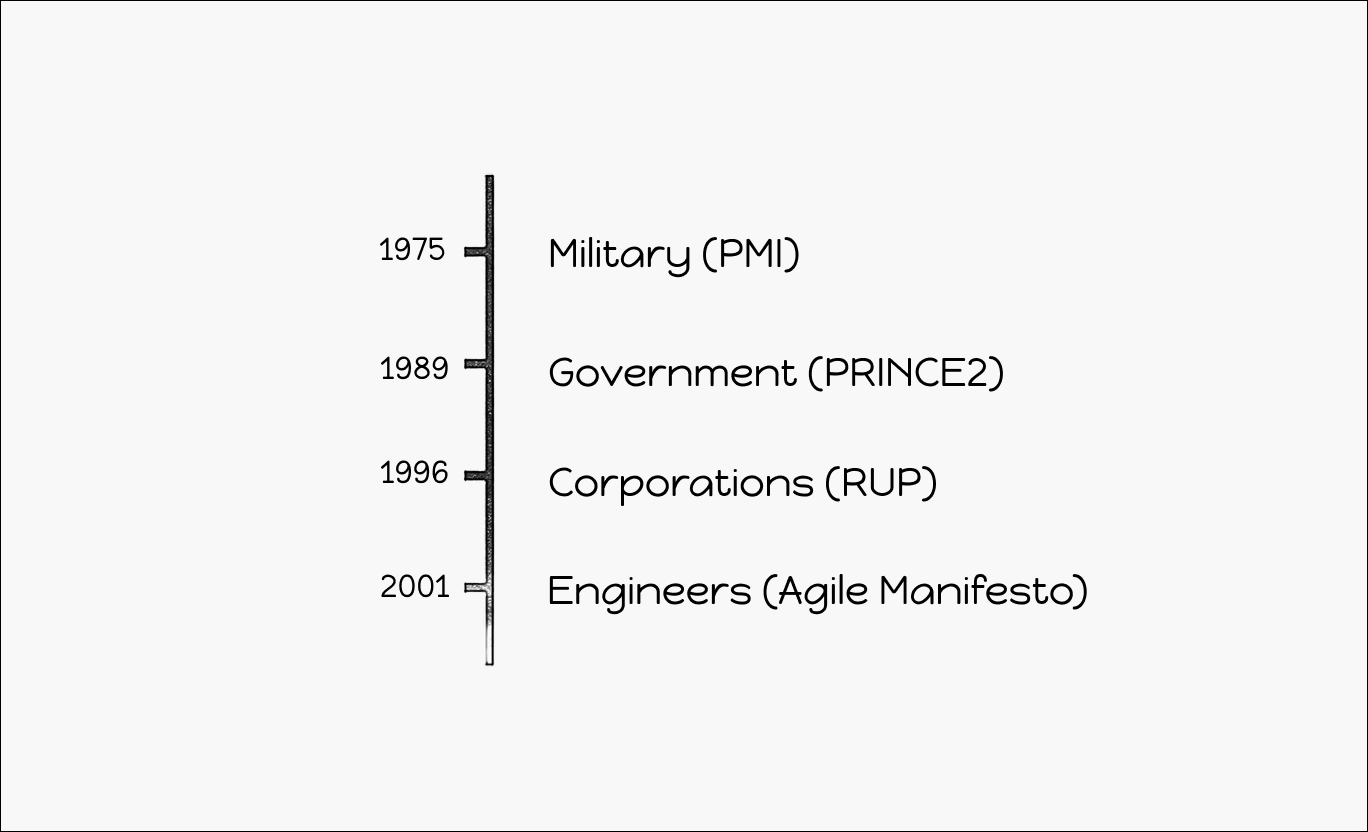
Ancient projects like the pyramids showed us one thing: you’ve got to plan time, people, and resources if you want to pull off something big. But modern project management? That’s a 20th-century thing. It all started with the PMI and their PMBOK standard.
From there, things evolved: PRINCE2, RUP, Agile, Scrum. They all took different paths but at their core, they’re built on the same basic ideas. Even PMBOK evolved to embrace Agile thinking and a customer-first mindset.
And since PMI/PMBOK is recognized by the likes of ANSI, IEEE, and ISO, when we talk about “good project management”, we’re basically talking about principles that trace back to these guys—one way or another.
4) The five‑phase lifecycle you’ll run again and again
Most people treat project management as a checklist. But in reality, every project follows a narrative arc—a lifecycle where each phase builds momentum for the next
If you skip a beat in the beginning, you feel the pain at the end. Here is how the arc actually moves: initiation → planning → execution → monitoring and control → closure.

Part II — Project Initiation
5) Project charter: the essential you can’t skip
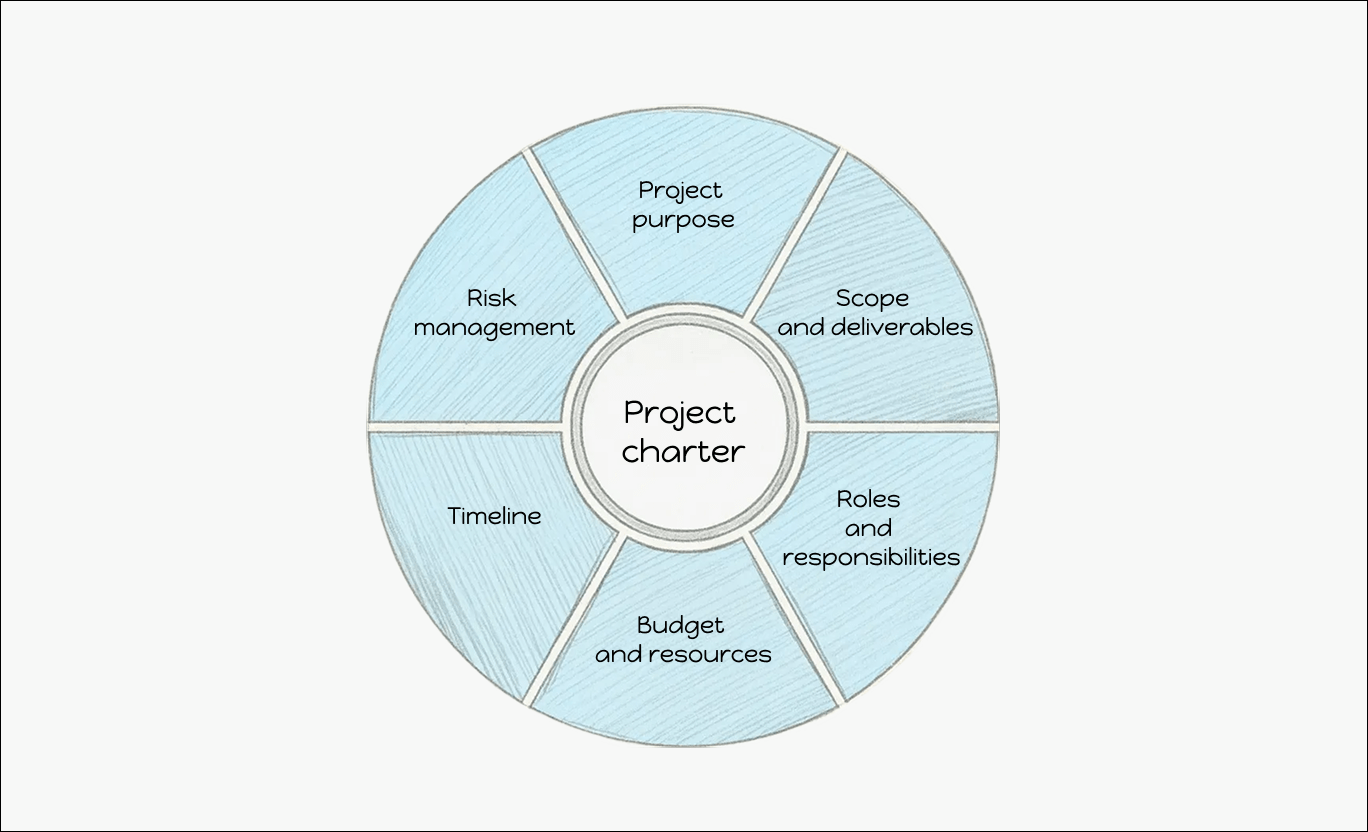
Project initiation is the first phase that turns an idea into an approved project. Here’s what you do in this phase: define why the project matters and what it should achieve, identify the main stakeholders, outline the scope and key deliverables, check if the project is realistic and worth doing, create a project charter (that formal doc that says “go” and gives the project manager the green light and authority), and secure the necessary approvals and funding.
A project charter is a short (usually 3-5 pages) document that officially launches a project and sets its main rules: what you’re doing, why you’re doing it, and by when. It locks in the goal, key deadlines, and shared expectations between the sponsor and the project manager. After signing it, everyone knows the boundaries and what success looks like.
6) Gather requirements — so you don't build the wrong thing
Requirements aren't just a to-do list; they are the boundary of your playground. They define the scope and ensure everyone is building the same mental image of the final product.
To get that alignment, you need to capture four specific dimensions. First, you need the user and client needs—the actual problem you are solving. Second, you need the sponsor expectations, which often differ from what users want. Third, you need the regulatory rules you can't break. And finally, you need the constraints—the hard reality of budget, deadlines, and technology that limits what is possible.
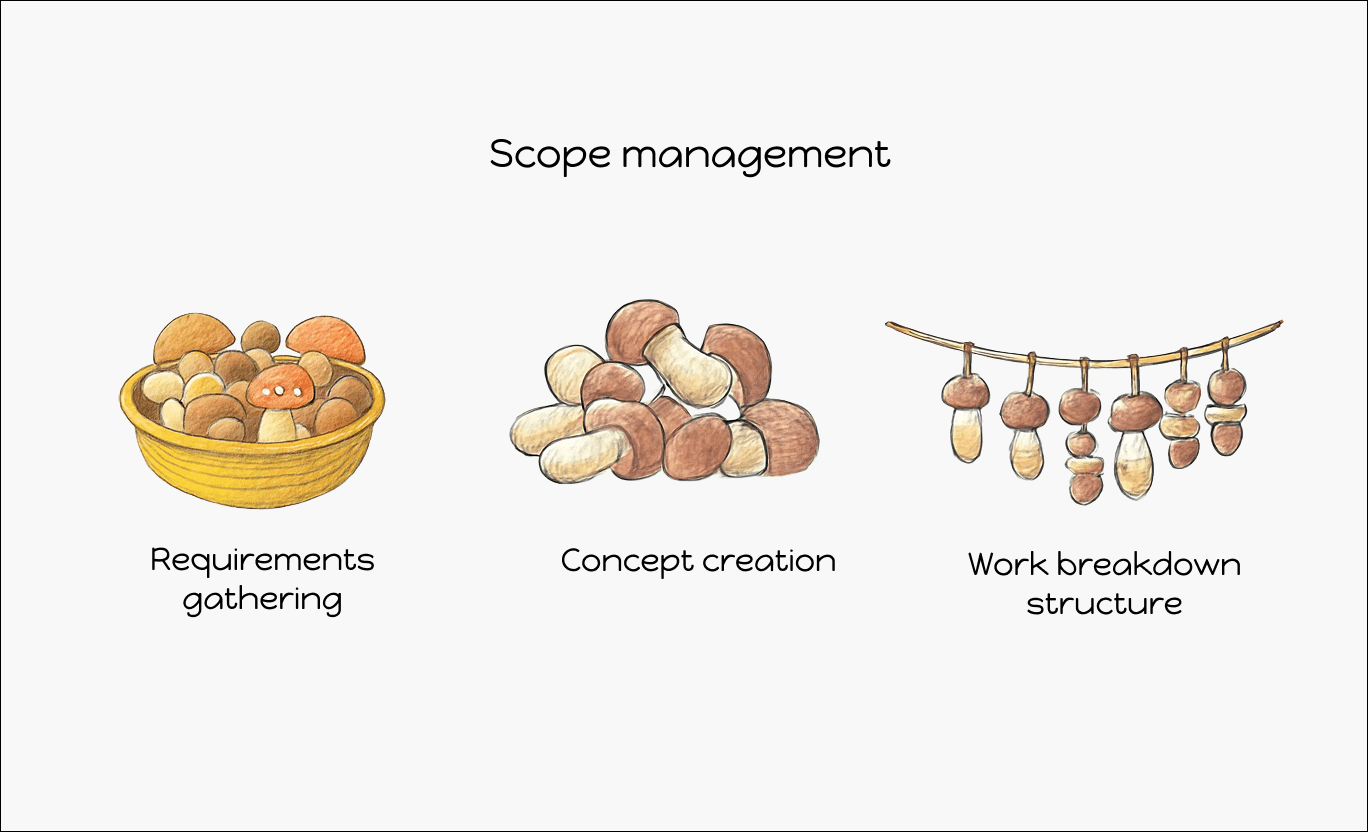
Once you have this pile of requests, you need a way to track them. This is where the Requirements Traceability Matrix (RTM) as the thread connecting every requirement to a specific deliverable and test case.
Part III — Project Planning
7) Break down your project with WBS
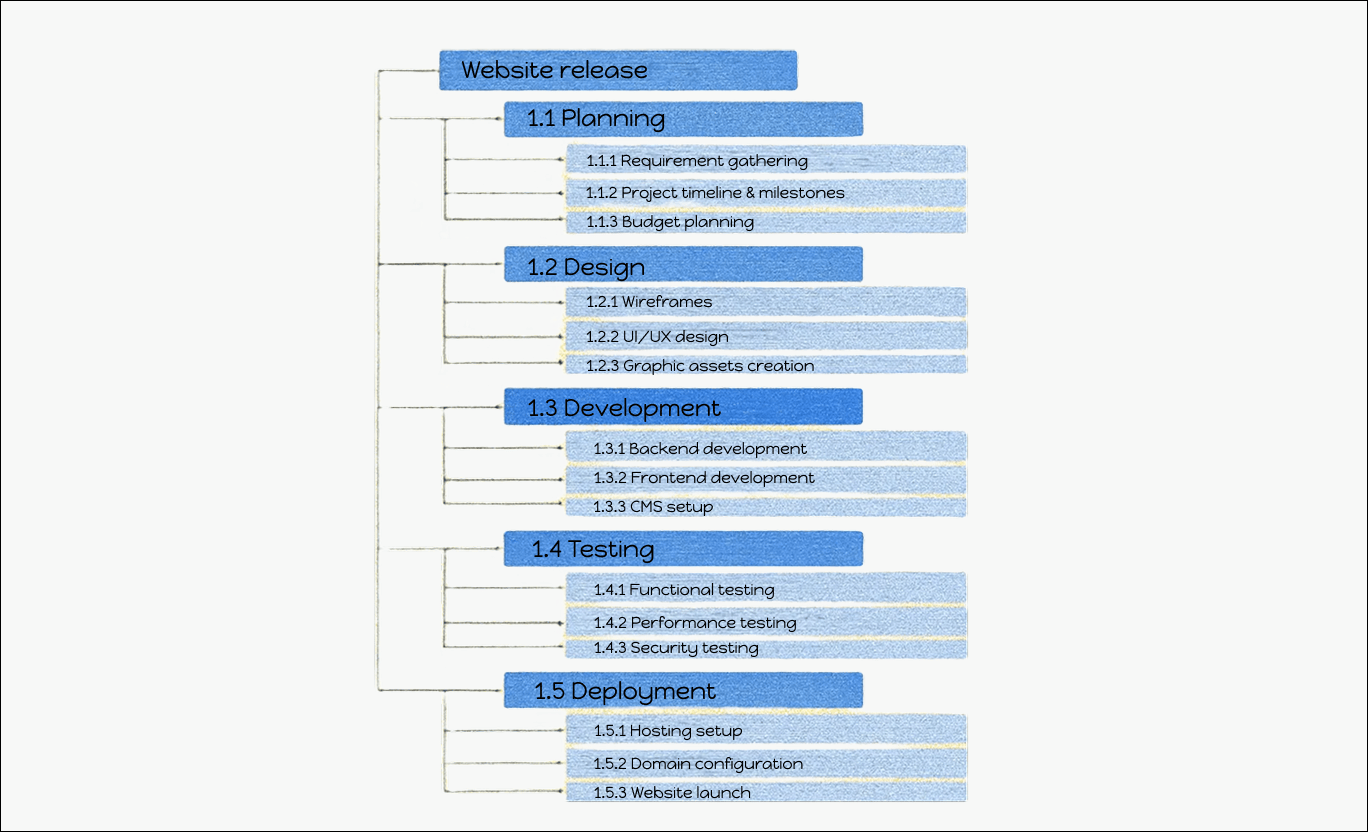
Once you’ve nailed the scope, it’s time for the WBS. A Work Breakdown Structure (WBS) is a tree-like breakdown of all the work in your project, sliced from the big goal into smaller, manageable pieces. Start with the overall project result at the top (e.g., “Website Release”), then break it into major deliverables (Design, Development, Testing, Launch). Keep going: break those into smaller sub-deliverables and, finally, down to work packages — the smallest chunks that are clear, estimable, and assignable to one person or team.
8) How to predict the future
Project estimation is where you predict, up front, how much time, money, and people you’ll need to finish a project. You take a look at what needs to be done and answer these questions: How long will it take? How much will it cost? Who do we need?
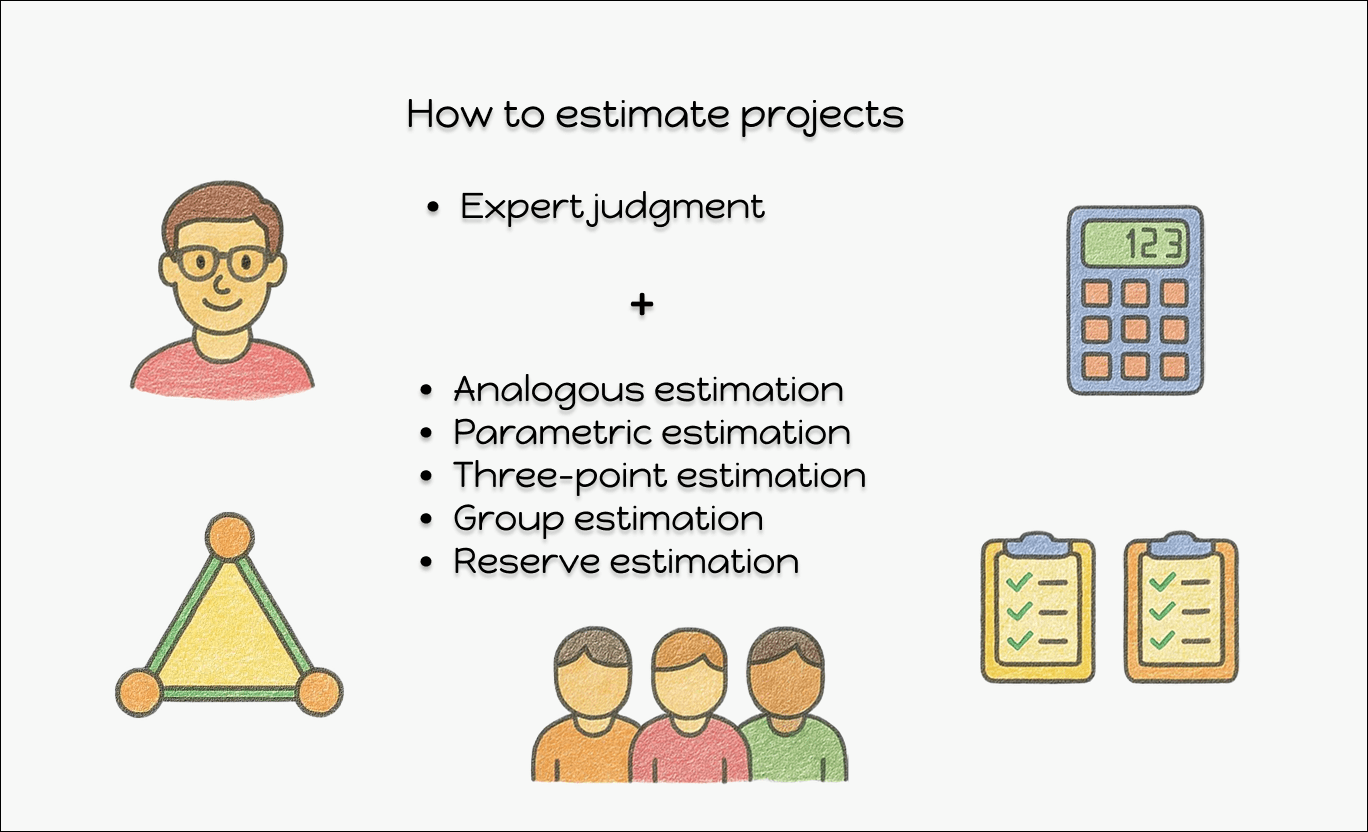
Here’s how you can estimate a project:
- Expert judgment: ask the people who’ve been there, done that.
- Analogous estimation: compare it to similar projects from the past.
- Parametric estimation: use numbers and formulas to guide you.
- Three-point estimation: for each task, estimate: best case (fastest), worst case (slowest), and most likely. Then find a middle ground to get a more realistic range.
- Group estimation: the team estimates together (Planning Poker, anyone?).
- Reserve analysis: add a bit of extra time and money “just in case” to cover risks and surprises.
9) Make your plans visual
A Gantt chart is a timeline picture of your project. On the left you see a list of tasks, and on the right you see horizontal bars that show when each task starts, how long it takes, and when it should finish. You can also see dependencies and often who is responsible for each task.
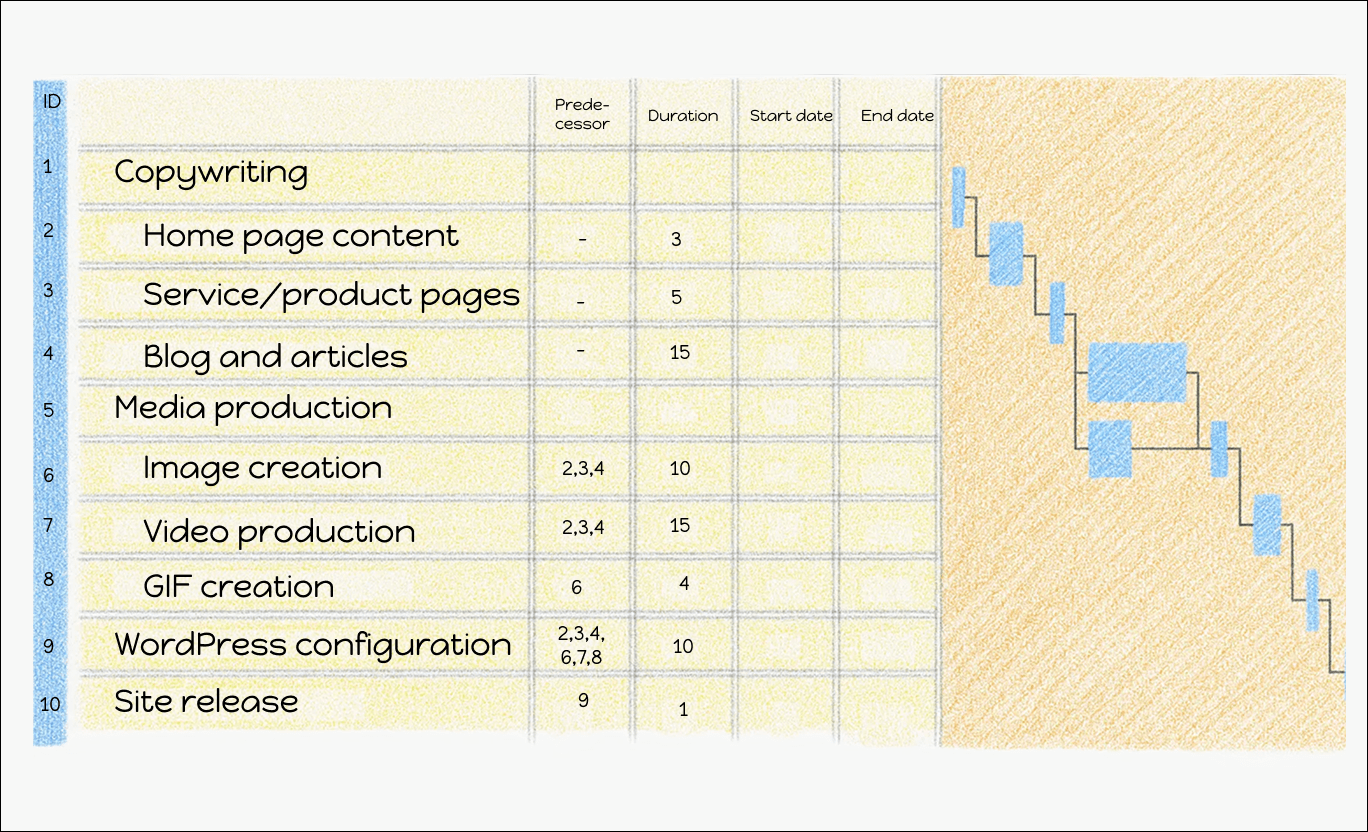
This view does more than just look pretty; it exposes the reality of your schedule. By mapping tasks against time, you naturally figure out the order of operations and uncover the critical path—the specific sequence of tasks that dictates your actual finish date. Instead of guessing how a late task affects the deadline, the Gantt chart shows you exactly where a single delay will push the entire project off a cliff.
Part IV — Run the Work (Tracking, Quality, Risk)
10) Essential tools for monitoring scope, schedule, and budget
To keep your projects on track, it’s important to regularly review key baselines—scope, schedule, and budget—and make adjustments when needed. For simpler projects, tools like a roadmap and burndown chart offer easy ways to track progress and stay aligned with timelines. Using task tracking software, such as Planyway, provides real-time updates, while also allowing you to monitor team workloads and ensure balanced resource allocation.
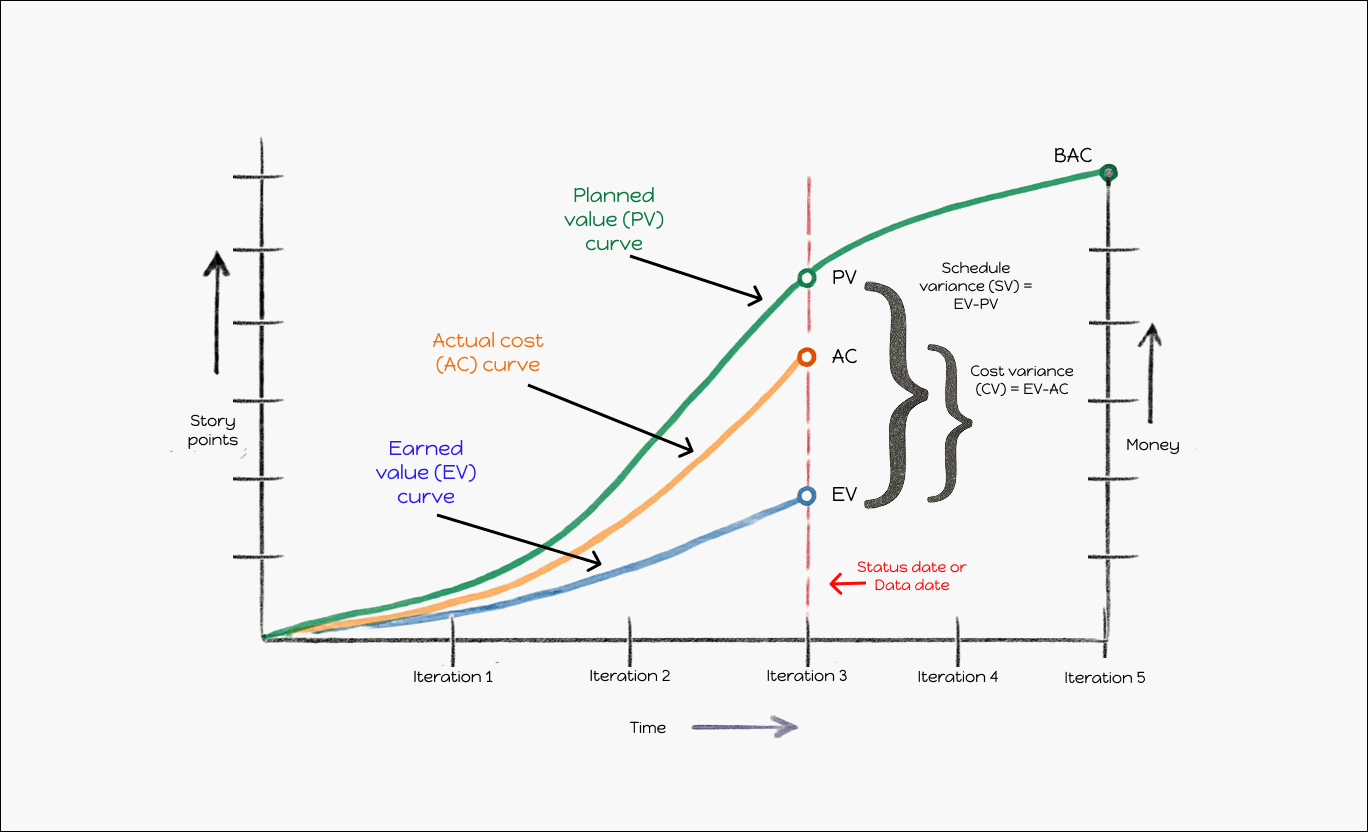
For more complex projects, Earned Value Management (EVM) is a method that helps you measure how well your project is doing by comparing the work you've completed with what you planned to do, and how much money has been spent compared to the budget.
11) The toolkit that fixes problems before they ship
Project progress is not the only thing to track. Tracking quality requires your attention too as it helps you find and fix problems early and improve over time.

Here are some tools you can use:
- Fishbone (Ishikawa) helps you find the root causes of problems.
- Flowchart shows where defects are happening in the process.
- Control chart helps you tell the difference between normal changes and real problems.
- Pareto helps you focus on the most important issues.
- Scatter plot tests if different factors are connected.
12) How to keep your project finances in check
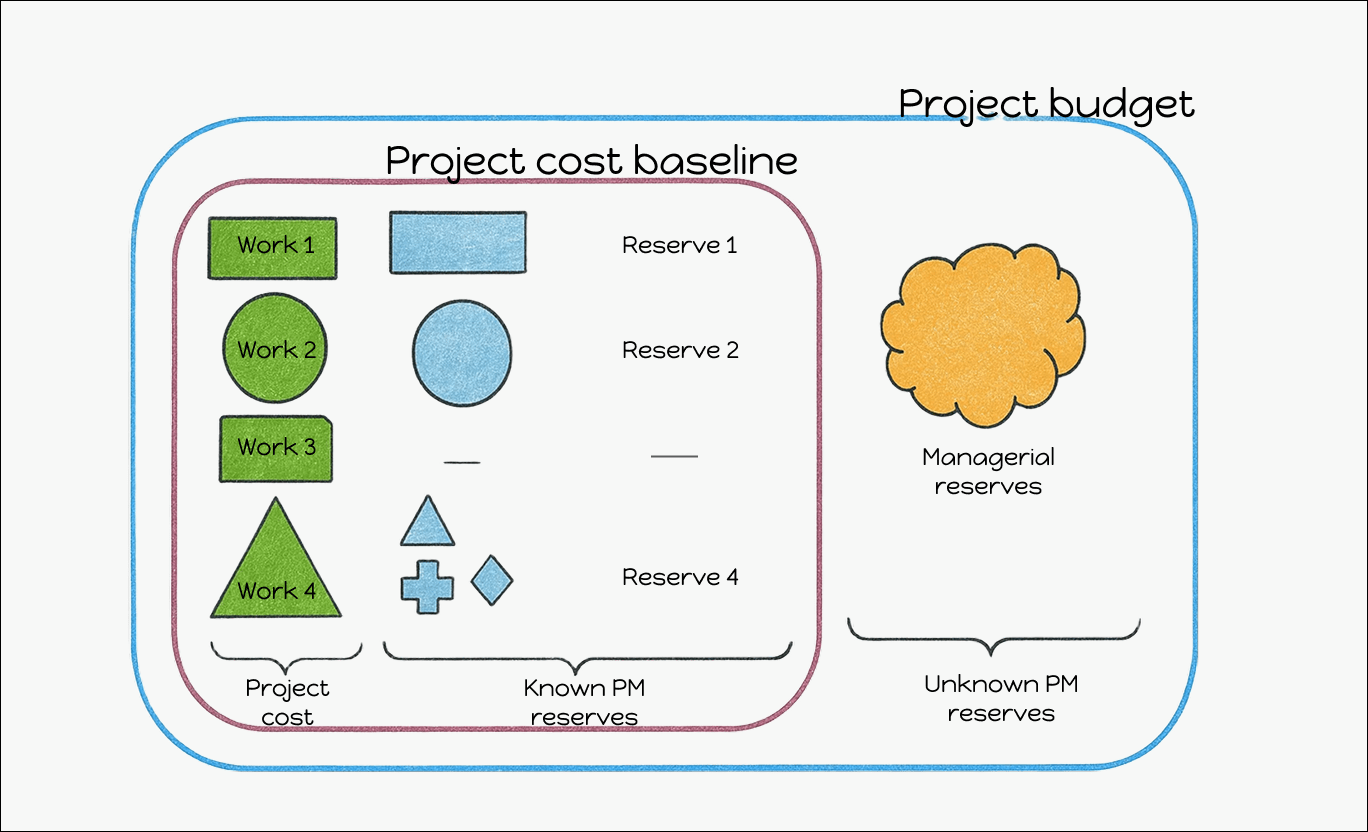
Start by creating a cost baseline that covers all resources, materials, and contingencies. Then, track planned vs. actual costs throughout the project to stay in control of your project’s finances.
Use a one-sheet budget view to consolidate cost data and keep the entire team aligned on the project’s financial performance.
13) How to manage risks proactively
Real risk management is the difference between firefighting and fire prevention. The goal is to address potential issues before they metastasize into problems that derail the entire project.
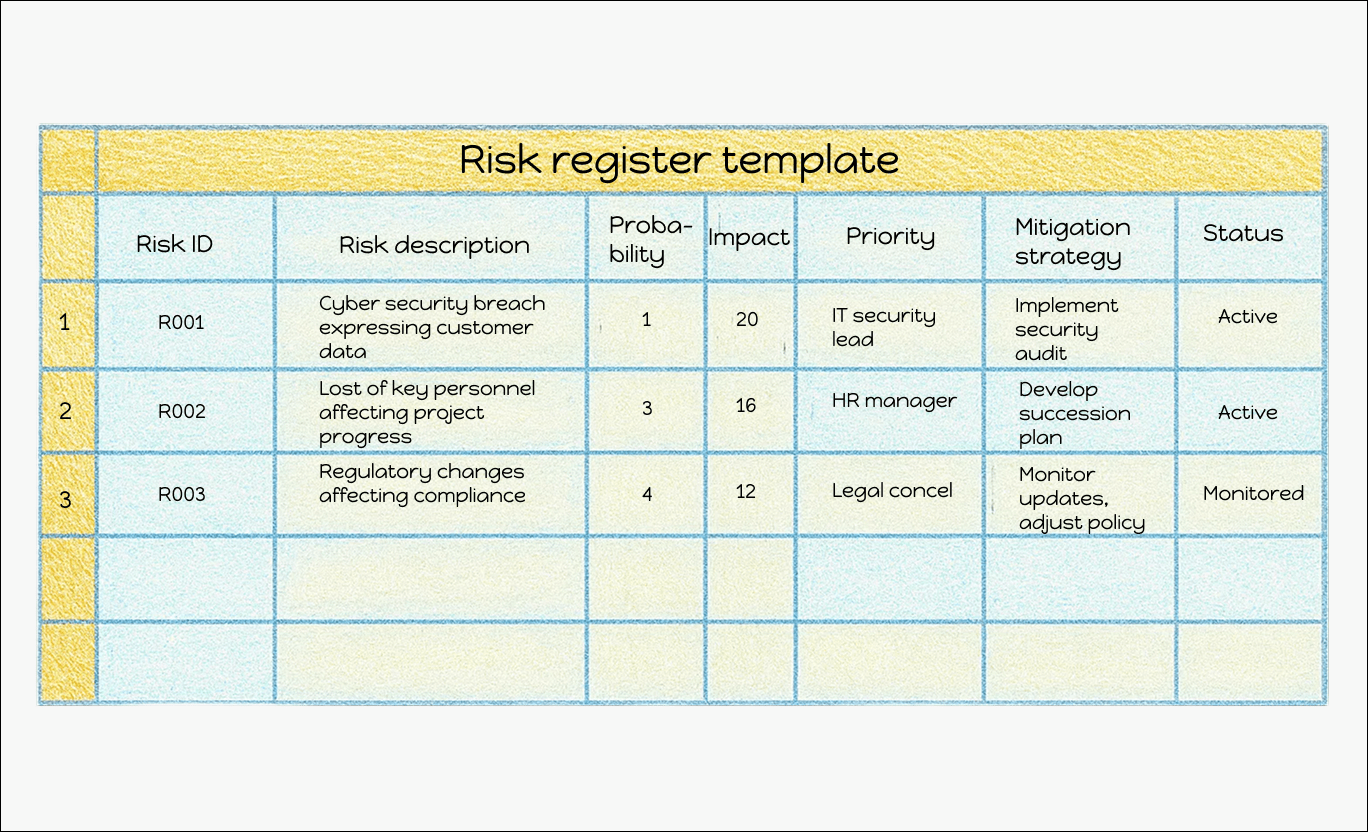
This isn't about reacting to every shadow; it’s about filtering the noise. To do this, you need a living risk register—a document that evolves with the project, rather than gathering dust after the kickoff meeting.
When you communicate these risks, escalate trends, not individual items. Leadership doesn't need to know about every minor delay; they need to know if the team's velocity is consistently dropping. Finally, plan for the worst. The best project managers aren't optimists; they are prepared realists who have a mitigation plan ready before the storm hits.
14) Compress the schedule when reality hits
Eventually, every project drifts. Whether it’s delays or unexpected scope creep, there comes a moment when you need to shorten the timeline to save the launch. This is called schedule compression.
To do this, you essentially have three levers to pull. First, you can try Fast Tracking—taking tasks that were meant to happen one after another and forcing them to run in parallel. Second, you can try Crashing, which is manager-speak for "throwing money at the problem" by adding extra resources to the critical path. Finally, you can attack the scope itself: cutting non-essential features, strictly rejecting new change requests, or (cautiously) using overtime.
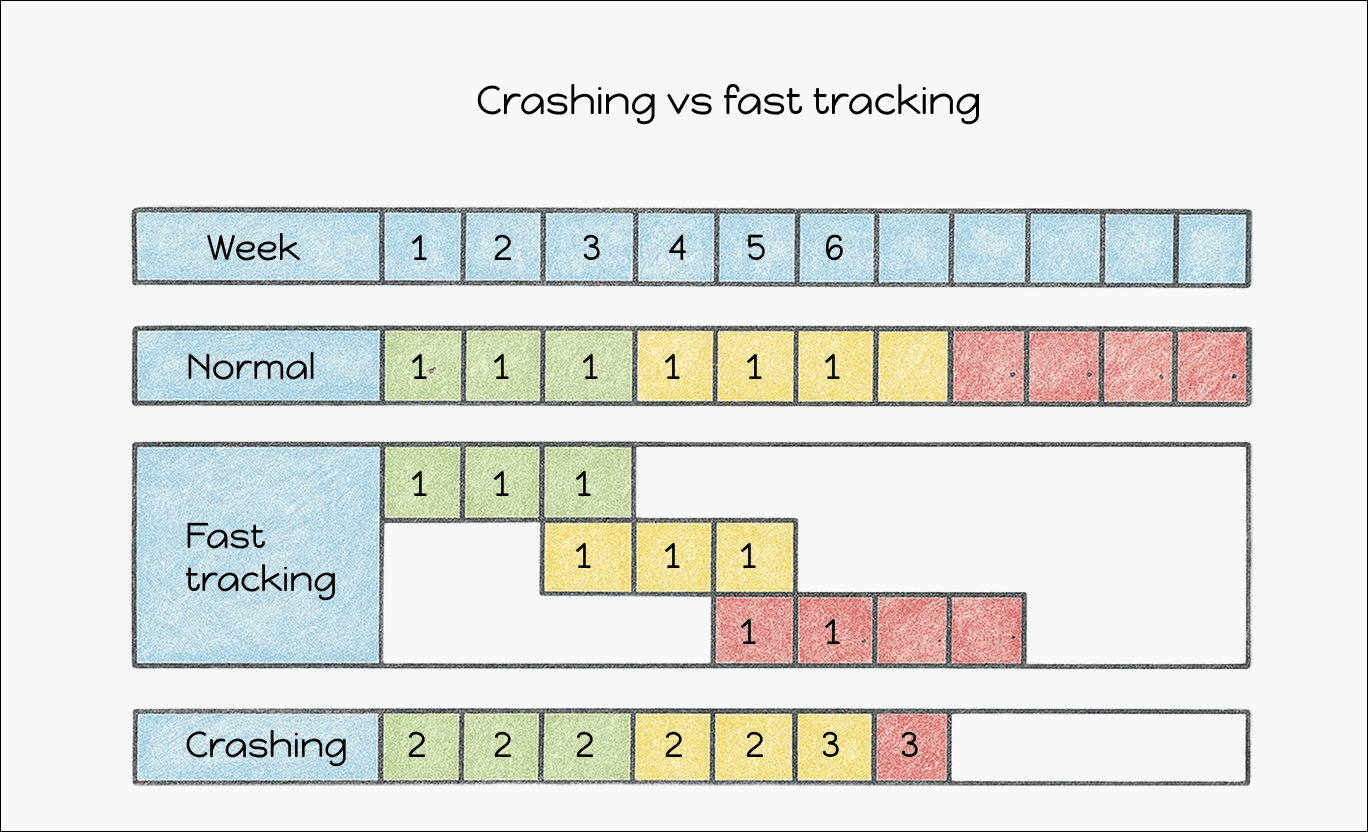
Just remember that none of these are free. Crashing costs money, fast tracking increases the risk of rework, and overtime burns out your best people. You are buying time, but you are paying for it with risk.
Part V — Team, Communication & Leadership
15) Communication scheme you can rely on
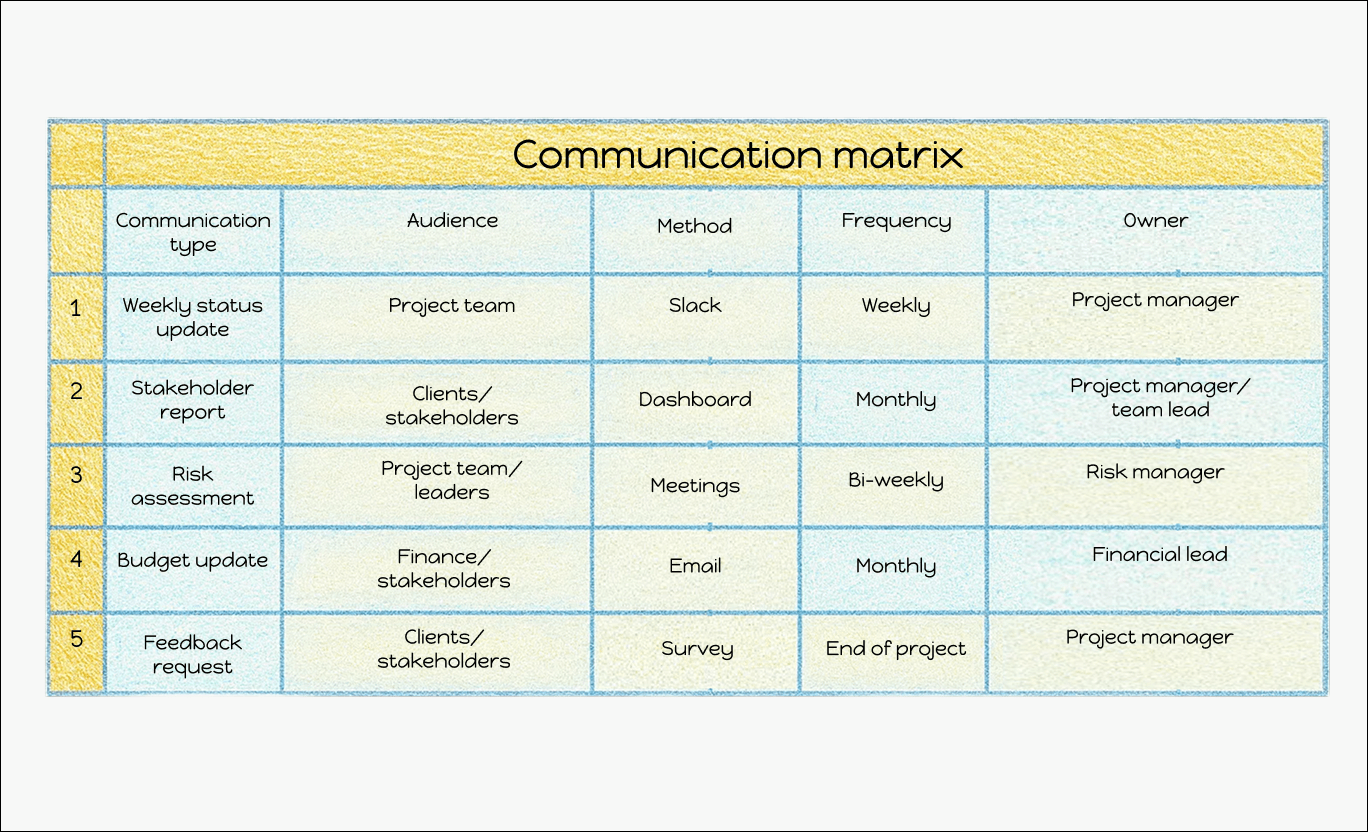
Project managers spend up to 90% of their time communicating. A well-structured communication strategy ensures the right information gets to the right people at the right time—no confusion, no delays.
Tools like communication matrix help visualize and organize the who, what, when, and how of communication, keeping everything on track.
16) How to set meetings that people don’t dread
Most staff meetings are expensive rituals where people watch each other talk. To make them efficient, you need to ruthlessly structure the time.
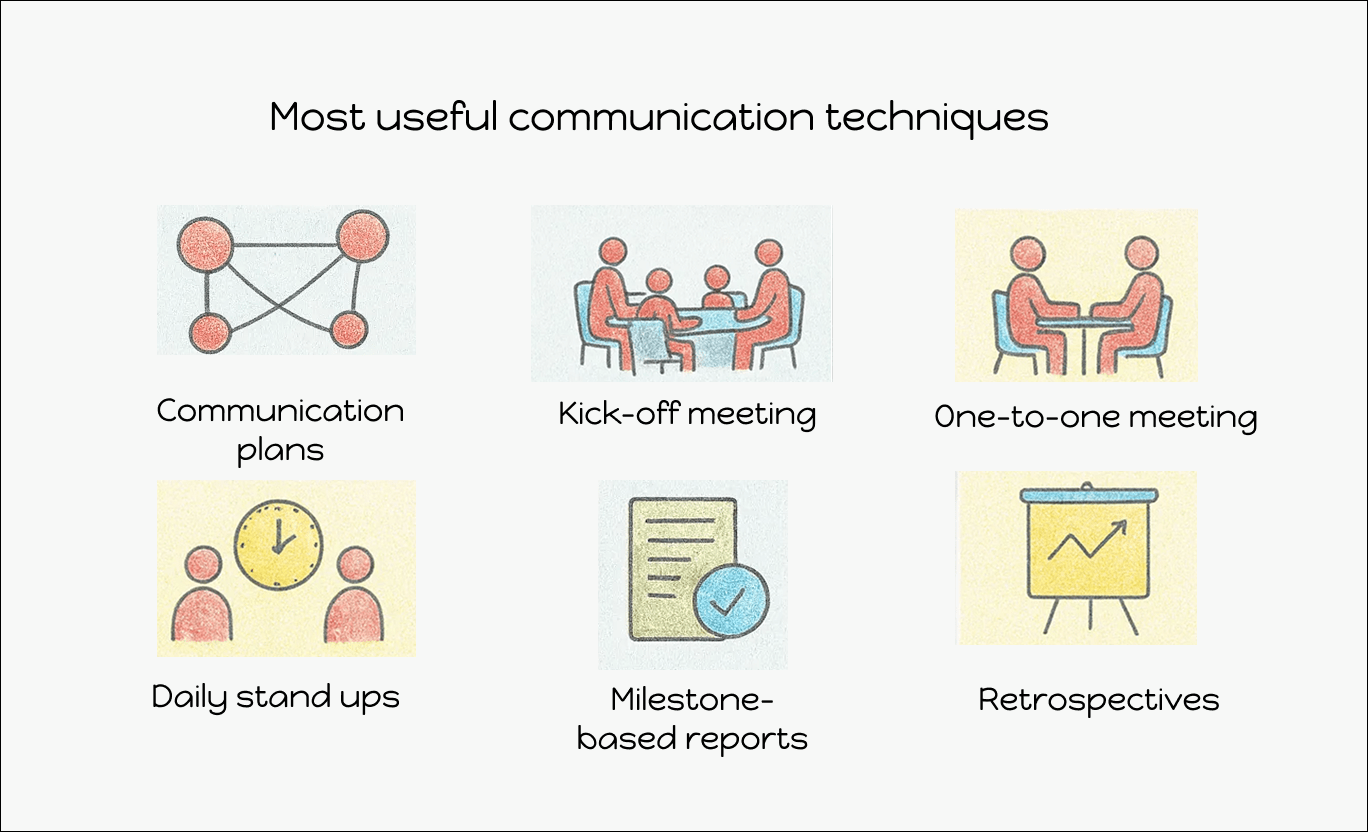
It starts before the meeting begins. Send the agenda 24 hours in advance so people can actually prepare, and cap the session at 50 minutes. That extra 10 minutes gives people a breather before their next call and creates a subtle pressure to keep things moving.
Inside the room, banish the "status update." Routine updates should happen asynchronously (Slack/Email) before you meet. Use the live time exclusively for blockers and decisions—the things that actually require conversation. To keep things fair, rotate the scribe role every week so no single person is stuck with the admin work, and strictly use a parking lot for off-topic discussions. If a topic gets parked twice, it deserves its own meeting, not a slot in this one.
17) Build a team that stays in the zone
Building a team that stays in the zone isn’t just about checking off leadership tactics—it’s about understanding psychological theories and practical strategies. Align your leadership style with the team’s needs and motivations, and you’ll create an environment where they’re engaged, empowered, and fired up to perform at their best.
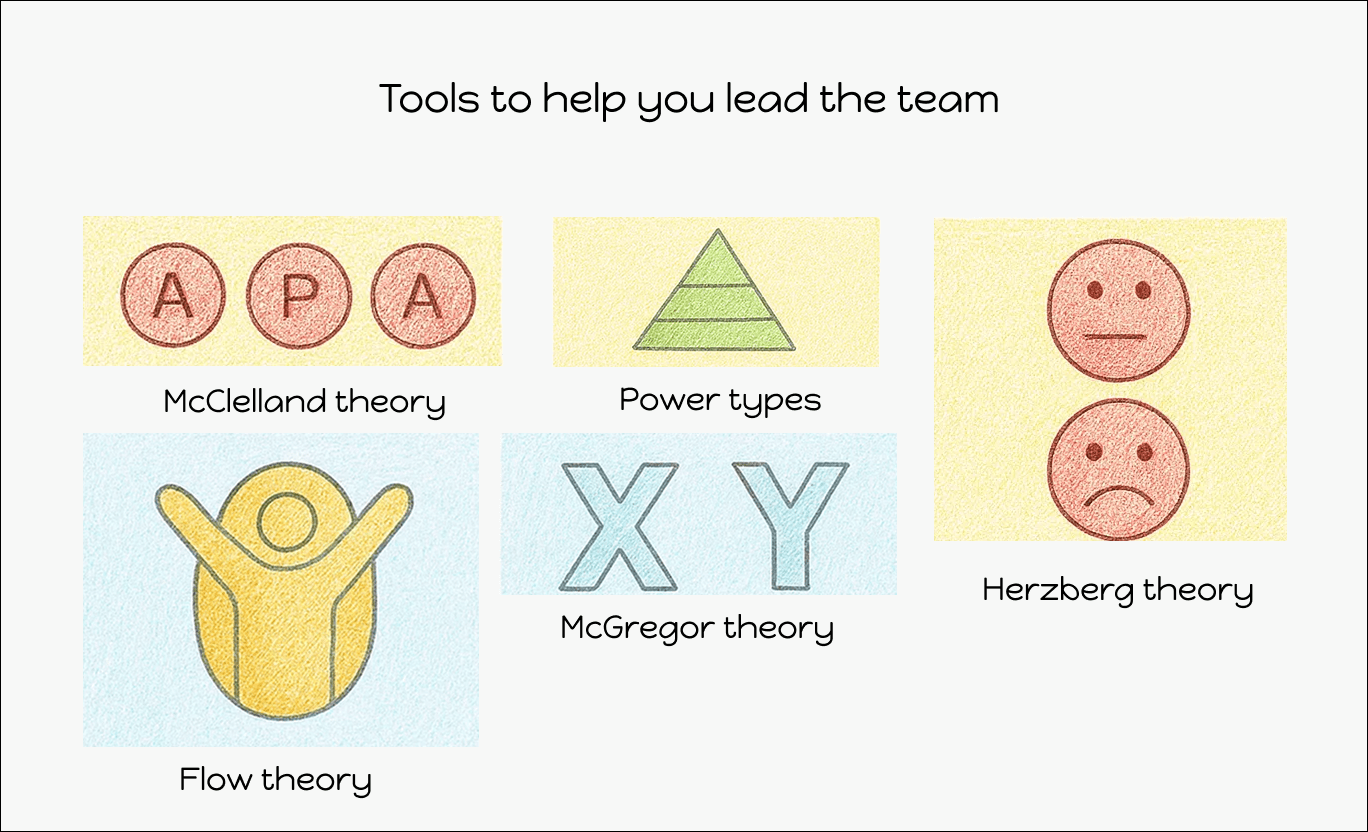
Here’s how to make it happen:
- Herzberg: fix hygiene (pay/process) but motivate with growth, mastery, and recognition.
- Flow: match challenge to skill; raise both over time.
- Power: rely on expert & referent power; use coercive rarely.
- McGregor: design for Theory Y (trust & autonomy), watch for X triggers.
- McClelland: know who seeks achievement, power, or affiliation — tailor tasks and feedback.
18) How to manage stakeholders expectations wisely
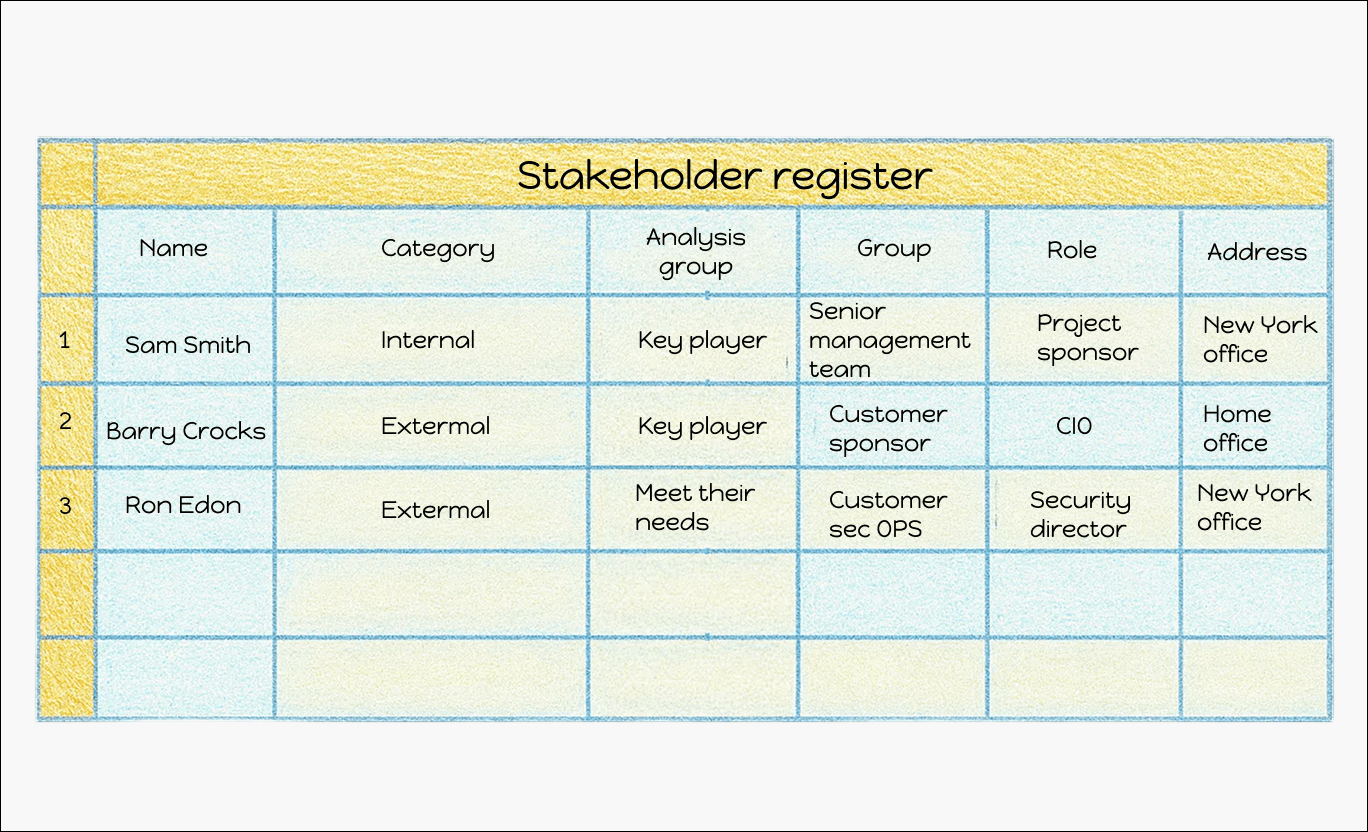
Stakeholders—clients, team members, executives, external partners—they all come with different levels of influence, interest, and expectations. Managing those relationships? It’s not optional. It’s what keeps your project aligned, your risks lower, and your trust higher. Use a Power/Interest Grid to see who’s got the muscle, who’s just watching, and who needs regular attention.
Part VI — Finish Well
19) Evaluation & closure: the right way
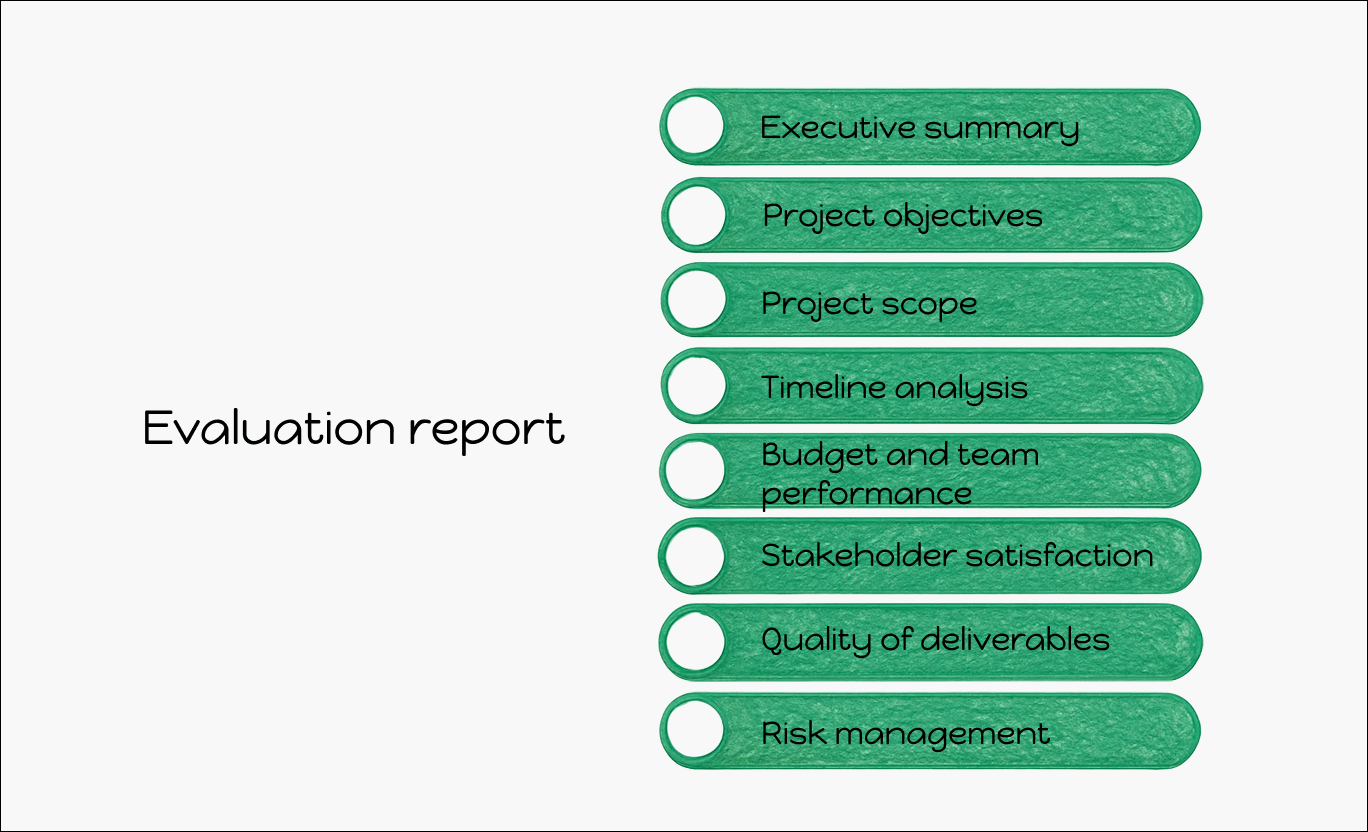
Closing a project successfully isn’t just about ticking off tasks—it’s about evaluating performance, learning from what worked (and what didn’t), and ensuring the project’s impact lasts long after delivery. To do this the right way, evaluate at every stage—before, during, after, and even long after significant milestones. Publish a final report that compares objectives vs. results, analyzes timeline and budget variance, tracks quality outcomes, outlines the risk story, includes stakeholder notes, documents lessons learned, and defines next actions. Right after delivery, schedule a 30-minute “Now What?” session with the sponsor to ensure clear adoption, ongoing support, and metrics ownership for tracking long-term success.
Congratulations! You’ve nailed the basics. Get the foundation solid, keep communication flowing, and keep the plan on track. Everything else is just keeping the beat.